
Laparoscopic Urological Surgery

Laparoscopic Urological Surgery
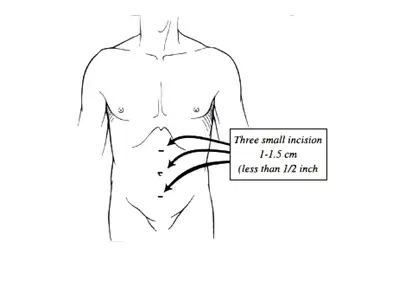
Many traditional urologic surgical procedures require large incisions with lengthy hospitalization and recovery. Minimally invasive surgery, also often known as laparoscopic or keyhole surgery to patients, has recently been developed in the field of urologic surgery with the advancement of engineering and computer technologies. Using a small telescope with built-in magnification mechanism and a variety of long, thin surgical instruments placed through approximately 3-5 incisions (each of which is usually no larger than a dime in size), the surgeon is able to perform minimally invasive surgery for a variety of urologic diseases and problems. Patients who have undergone these procedures have enjoyed not only the same diagnostic and therapeutic benefits of traditional open surgery but also greatly reduced postoperative pain, shorter hospitalization, faster recovery, and better cosmetic results.
Minimally invasive surgery has been applied to a multitude of benign (non-cancerous) and malignant (oncologic or cancerous) urologic problems. Furthermore, it has been applied to conditions affecting a variety of urologic organs (including kidney, adrenal gland, ureter, bladder, prostate, lymph nodes).
Recently, robotic technology (Da Vinci Surgical System by Intuitive Surgical) has been used in the field of laparoscopic urologic surgery. Radical prostatectomy for prostate cancer is an area with increasing widespread use of such robotic technology. When robotics are involved, such procedure is often called “robotic-assisted laparoscopic radical prostatectomy” or “Da Vinci radical prostatectomy.” Robotic surgery has been reported to provide better visualization and greater dexterity to the surgeon, and the clinical data to date appear to be promising and similar to those of the established conventional open surgery.
Minimally invasive surgery may not be an appropriate option to every patient. At our clinic individualized evaluation and consultation is provided to all patients interested in this surgical modality.
There Are Several Advantages Of Laparoscopic Surgeries Over Traditional Open Surgeries
- Reduced hospital stay (one day in younger, healthy patients) and faster healing
- Less postoperative pain and less need for pain medication
- Quicker return to normal activity and work
- Smaller incisions and less scarring
Nephrectomy (Removal of Kidney)
Nephrectomy is a surgical procedure to remove all or part of a kidney. A nephrectomy may be performed to treat kidney cancer or to remove a seriously damaged or diseased kidney.
In a donor nephrectomy, the surgeon removes a healthy kidney for transplant into a person who needs a functioning kidney.

Pyeloplasty
Ureteropelvic junction (UPJ) obstruction is characterized by impairment in urinary flow as it travels from the renal pelvis to the bladder. Sometimes UPJ obstruction is detected during an ultrasound before birth. Antenatal hydronephrosis, which may be caused by intrinsic UPJ obstruction, may be found by ultrasound as early as the second trimester of pregnancy. Other cases of UPJ obstruction may be discovered during an evaluation for signs and symptoms such as recurrent vomiting and feeding difficulties.
In older children, UPJ obstruction may be an extrinsic problem caused by compression of crossing vessels. Symptoms in these children can include nausea, vomiting, abdominal-flank pain, urinary tract infection and hematuria.
In lower grade obstructions, immediate surgery may not be necessary. If the obstruction is not causing loss of kidney function or pain, observation and monitoring may be indicated.
Because prolonged high-grade blockage, particularly with infection, can be harmful to the kidney, surgery is necessary to treat kidney from further damage. Kidney stones, failure to thrive, recurrent urinary tract infections or loss of kidney function are indications for surgery.