
Genital Surgery

Circumcision
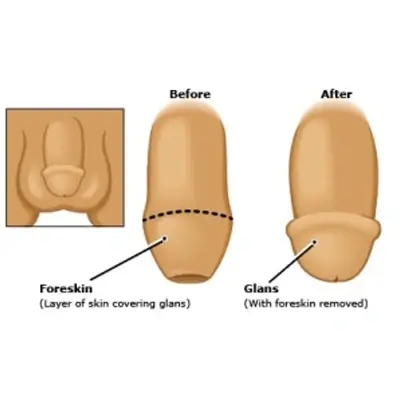
Circumcision is the surgical removal of the skin covering the tip of the penis. This genital surgery is done when the foreskin is too tight to be pulled back (retracted) over the glans.
Circumcision might have various health benefits, including:
- Easier hygiene.
- Decreased risk of urinary tract infections.
- Prevention of penile problems.
- Decreased risk of penile cancer.
Frenuloplasty
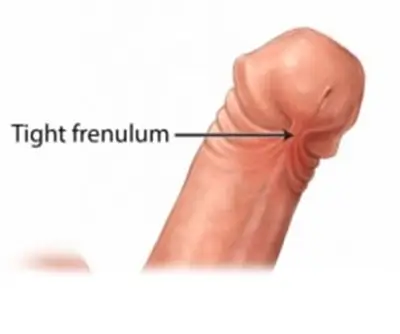
An abnormally short or sensitive frenulum of the penis can make some types of sexual activity uncomfortable or even painful. When it is a naturally occurring event, a short frenulum can restrict normal retraction of the foreskin during erection (a condition known as frenulum breve). The goal of treatment is to allow normal retraction of the foreskin.
The procedure of this genital surgery usually involves the removal of the frenulum or the creation of an incision in the frenulum that is then stretched to lengthen it and stitched closed.
Penile Curvature
Some men have a penis that curves to the side, upward or downward when erect. This is common, and a bent penis in most men isn’t a problem. Generally, a bent penis is only a cause for concern if your erections are painful or if the curvature of your penis interferes with sex.
Genital surgery usually isn’t recommended until the curvature of your penis stops increasing. Surgical methods we use are
- Suturing (plicating) the unaffected side.
- Incision or excision and grafting.
- Penile implants
Penile Augmentation Surgery
It involves procedures to increase penis length or girth, often sought for cosmetic reasons despite average penile sizes being normal for most men. These surgeries carry significant risks and variable effectiveness, requiring careful patient selection.
Procedure Types
Common techniques for length include suspensory ligament release, V-Y or Z plasty, lipoplasty, and scrotoplasty, which enhance perceived length. Girth enhancement uses soft tissue fillers, fat grafting, grafts, or silicone implants like Penuma. More invasive options involve penile disassembly or total phalloplasty.
Ideal Candidates
Suitable patients typically have a flaccid length under 5 cm or girth under 8 cm, or conditions like epispadias. Procedures suit those with realistic expectations after counseling, not body dysmorphia.
Risks and Complications
Infections, scarring, deformity, erectile dysfunction, penile shortening, and need for revision occur frequently, especially with silicone or fat injections.
Recovery Timeline
Pain and swelling subside in 1 week; return to work possible then, but avoid heavy lifting for 4 weeks and intercourse for 4-6 weeks. Full healing takes 4-6 weeks.