
LASER surgery for Large Kidney Stones (Mini PCNL/ECIRS)
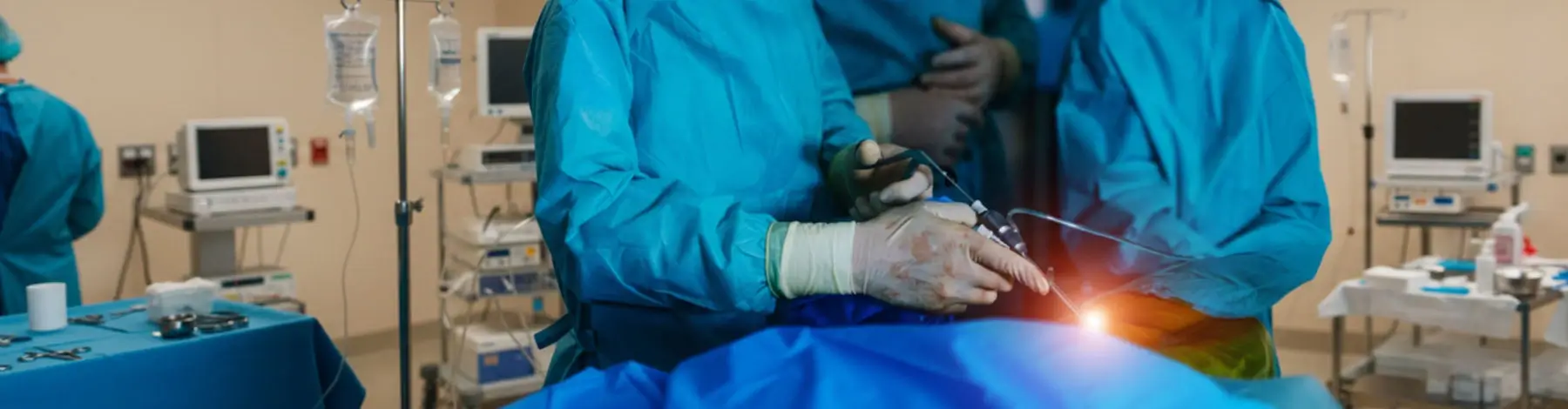
LASER surgery for Large Kidney Stones (Mini PCNL/ECIRS)
Mini PCNL (mini-percutaneous nephrolithotomy) and ECIRS (endoscopic combined intrarenal surgery) are minimally invasive procedures for treating kidney stones, particularly those 1-2 cm or larger in complex locations. These techniques use small incisions and endoscopic tools to access, fragment, and remove stones, offering advantages over traditional open surgery or standard PCNL.
Procedure Overview
Mini PCNL involves a keyhole incision (under 1 cm) in the back to insert a nephroscope, laser, and suction tools directly into the kidney for stone fragmentation and removal. ECIRS combines this anterograde PCNL approach with retrograde intrarenal surgery (RIRS) via the urethra, using dual endoscopes for better access to stones in multiple kidney calyces.
Key Advantages
Both methods achieve high stone-free rates (SFR) of 90-97%, especially for intermediate (1-2 cm) or lower pole stones, outperforming ureteroscopy alone.
- Reduced tract size minimizes bleeding, pain, and recovery time compared to standard PCNL.
- Lower complication rates (e.g., 2-4% vs. higher in traditional methods) and fewer reoperations.
- ECIRS enhances SFR for complex stones by improving visualization and fragment clearance.
- These procedures suit urologists managing challenging renal calculi, balancing efficacy with patient safety
Comparison: Mini PCNL vs ECIRS
| Aspect | Mini PCNL Advantages | ECIRS Advantages |
|---|---|---|
| Stone-Free Rate | Higher than URS for 1–2 cm renal stones | Superior to solo PCNL for large or complex stones |
| Operating Time | Often shorter than RIRS, especially for lower calyx stones | Highly versatile for multi-site stone clearance |
| Hospital Stay | Typically 1 night with faster recovery | Reduced need for multiple surgical sessions |
| Complications | Low risk of bleeding and infection | Lower overall complications compared to traditional PCNL |