Reconstructive Urology

Urethroplasty
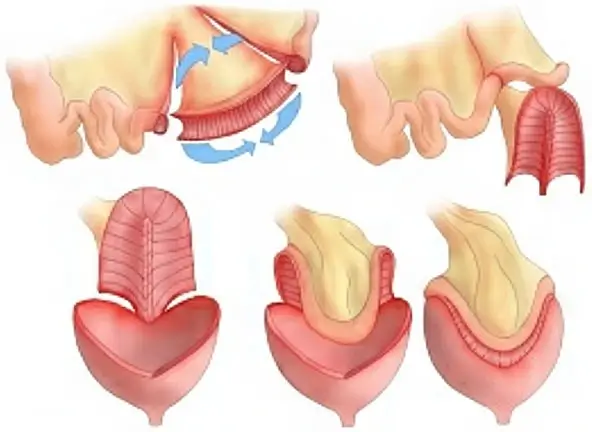
A urethral stricture occurs when scarring narrows the tube that carries urine out of your body. Urethral stricture restricts the flow of urine from the bladder and can cause a variety of medical problems in the urinary tract, including inflammation or infection. Urethroplasty involves surgically removing the narrowed section of your urethra or enlarging it. The procedure to cure urethral stricture may also involve reconstruction of the surrounding tissues. Tissues from other areas of the body, such as your skin or mouth (buccal mucosa ), may be used as a graft during reconstruction.
There are various types of urethroplasty procedures for urethral stricture.
- Bulbar Anastomotic
- Anastomitoc Urethroplasty – Membranous urethra
- Augmented Urethroplasty (Barbagli)
- Ventral Onlay
- Augmented Anastomosis
- Substitution Urethroplasty
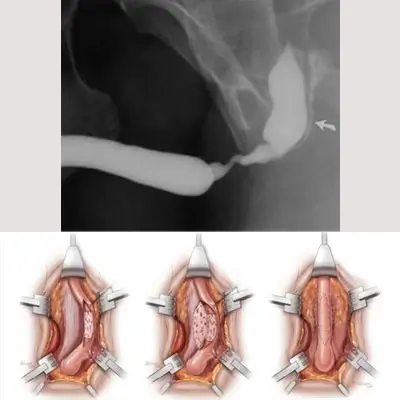
If done beautifully, a well-done urethroplasty of urethral stricture can save you years in medical costs and procedures.
Hypospadias Repair
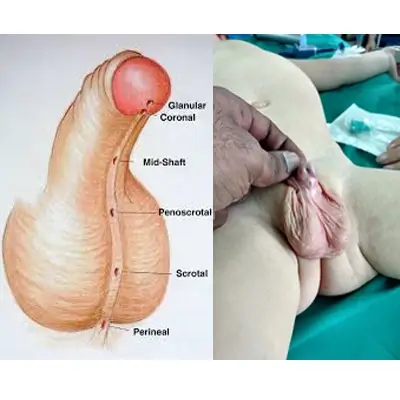
Hypospadias, unlike urethral stricture, is a condition in which the opening of the urethra is on the underside of the penis, instead of at the tip. The urethra is the tube through which urine drains from your bladder and exits your body.
You may feel distressed if your son is born with hypospadias. However, hypospadias is common and doesn’t cause difficulty in caring for your infant. In fact, surgery usually restores the normal appearance of your child’s penis. With successful treatment of hypospadias, most males can eventually have normal adult sexual function.
During surgery, we use tissue grafts from the foreskin or from the inside of the mouth to reconstruct the urinary channel in the proper position, correcting the hypospadias . Rarely, the repair may require two or more surgeries
Ileal Ureter
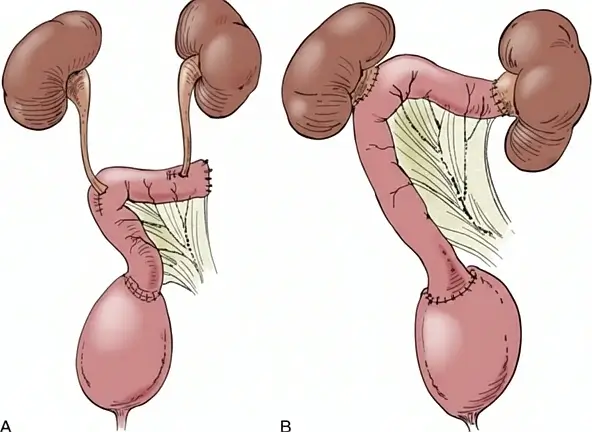
A ureteral stricture dissimilar to urethral stricture is characterized by a narrowing of the ureteral lumen, causing functional obstruction Partial or complete ureteral replacement with small bowel is indicated as a second-line treatment after failure of ureter-sparing surgery.
Unlike urethral stricture, Ureteral narrowing varies in location and length, and thus in their various treatment options. Once the decision is made to perform reconstruction of the ureter, we offer the best approach to reconstruction of the ureter.
For long ureteral strictures, we perform the ileal ureter replacement unlike urethral srticture.
Ureteroureterostomy is conceptually the simplest form of ureteral reconstruction of the upper, middle, or lower short segment defect, the distal ureteric defect can be managed successfully by ureterovesical reimplantation combined with anti-reflux technique, the longer ones are usually managed by Boari’s flap and in rare situations, by downward mobilization of the involved kidney, renal autotransplantation or urinary diversion .Moreover, extensive ureteral defects may need partial or total ureteral replacement by ileal loop or pedicled bowel segments.
Augmentation Cystoplasty
- Augmentation cystoplasty, also known as bladder augmentation, is a surgery to make the bladder larger. (The bladder is the organ that holds urine.)
- Many patients, augmentation cystoplasty can provide a safe functional reservoir that allows for urinary continence and prevention of upper tract deterioration. Both neuropathic and non-neuropathic causes for severe bladder dysfunction exist in pediatric and adult populations. Decreased bladder capacity or abnormal compliance may manifest as debilitating urgency, frequency, incontinence, recurrent urinary tract infections (UTIs), pyelonephritis, or progressive renal insufficiency. After making the incision in the abdomen, the surgeon cuts open the bladder at the top to prepare it for enlarging.
- The surgeon then removes a section of the small or large intestine ; detubularizes (cuts open) that link of bowel , and attaches it to the top of the bladder. The bladder and bowel are then sewn together to make the bladder larger.