
Laser Treatment in Urology

Laser Treatment for Prostate
Laser treatments for benign prostatic hyperplasia (BPH), such as Holmium Laser Enucleation of the Prostate (HoLEP) or Thulium Laser Vaporesection (ThuVARP), use focused laser energy to remove or vaporize excess prostate tissue via the urethra.
These procedures treat urinary symptoms like weak stream and frequent urination by relieving obstruction, often providing outcomes comparable to TURP (Transurethral Resection of the Prostate).
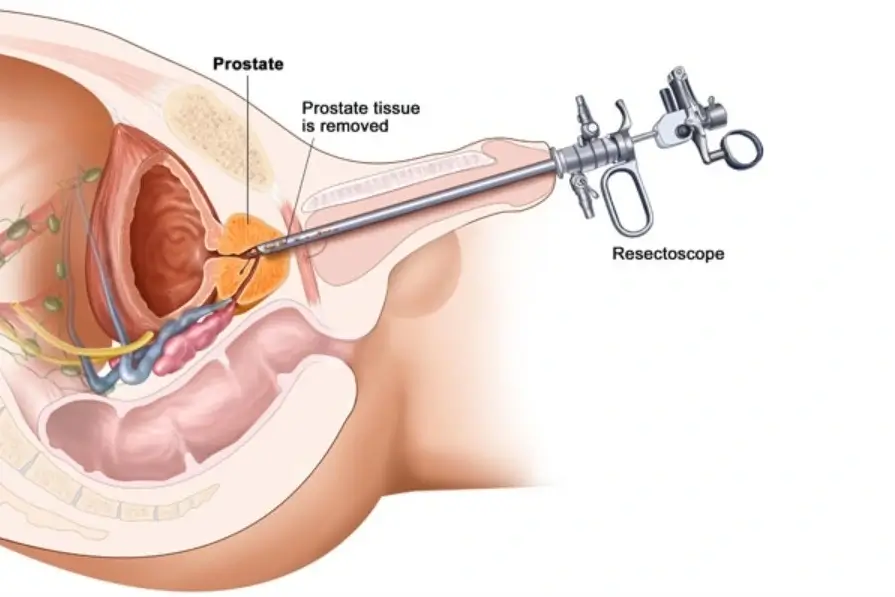
Key Advantages
Laser treatments typically cause less bleeding than TURP due to the laser's hemostatic effect, making them safer for patients on blood thinners. They also involve shorter catheterization times (often under 24 hours) and quicker recovery, allowing faster return to normal activities. Hospital stays are reduced, sometimes to outpatient or overnight.
Comparison: Laser Treatment vs TURP
| Aspect | Laser Treatment | TURP |
|---|---|---|
| Bleeding Risk | Lower risk of bleeding | Higher bleeding risk |
| Hospital Stay | Shorter stay (overnight or less) | Typically 1–2 days |
| Catheter Duration | Often less than 24 hours | Longer catheterization period |
| Recovery Time | Faster recovery with minimal discomfort | Slower recovery with more postoperative discomfort |
| Symptom Relief | Comparable long-term symptom relief | Comparable relief, sometimes faster urine flow initially |
| Cost | Higher procedural cost | Lower cost compared to laser treatment |
Laser prostate surgery, such as HoLEP or GreenLight procedures, typically allows for a quicker recovery than traditional TURP due to minimal bleeding and tissue trauma. Most patients experience initial relief from urinary symptoms within days, with full recovery spanning 2-6 weeks depending on prostate size and individual health. Catheter use is often limited to 24 hours or less.
Laser prostate surgery, including procedures like GreenLight PVP, HoLEP, and photoselective vaporization, is generally suitable for patients on blood thinners (anticoagulants or antiplatelets) due to its excellent hemostatic properties that minimize bleeding risk. Unlike TURP, it often allows continuation of medications like aspirin, clopidogrel, or warfarin without interruption, avoiding cardiovascular risks from stopping them. Studies confirm low rates of significant hematuria, transfusions, or clots in these high-risk patients.
LASER treatment For Kidney Stones
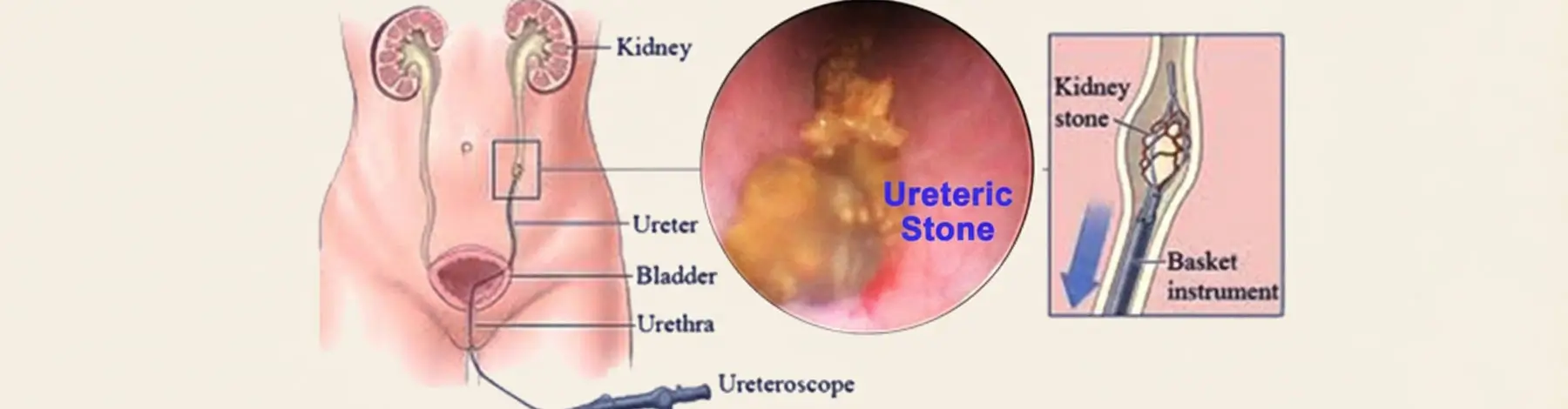
Mini-PCNL and RIRS are minimally invasive laser-based procedures used to treat kidney stones, particularly those 1-2 cm in size, by fragmenting stones with a holmium laser. Both achieve high stone-free rates but differ in approach, recovery, and suitability based on stone location. These options suit patients like urologists seeking efficient outpatient treatments with low morbidity.
Procedure Overview
Retrograde Intrarenal Surgery (RIRS) accesses the kidney via the urethra and bladder using a flexible ureteroscope, where laser energy dusts or fragments stones for natural flushing. Miniaturized Percutaneous Nephrolithotomy (mini-PCNL) involves a small (12-18 Fr) back puncture directly into the kidney calyx for laser fragmentation and suction removal. Both rely on holmium:YAG lasers for precise stone ablation, minimizing tissue damage
| Aspect | RIRS | Mini-PCNL |
|---|---|---|
| Access | Endoscopic access through natural urinary tracts | Percutaneous tract, smaller than standard PCNL |
| Ideal Stone Size | 1–2 cm stones, especially in upper and middle calyces | 1–2.5 cm stones, especially in lower pole calyces |
| Stone-Free Rate | Approximately 80–95%, may require retreatment | Approximately 85–100%, often achieved in a single session |
| Operative Time | Longer duration (average 60–90 minutes) | Shorter duration (average 45–75 minutes) |
| Hospital Stay | Shorter stay (1–2 days) with less postoperative pain | Typically 2–3 days of hospitalization |
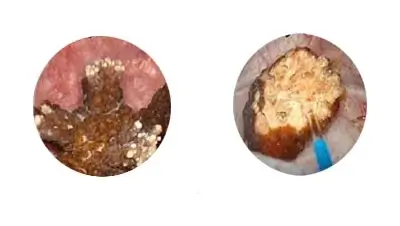
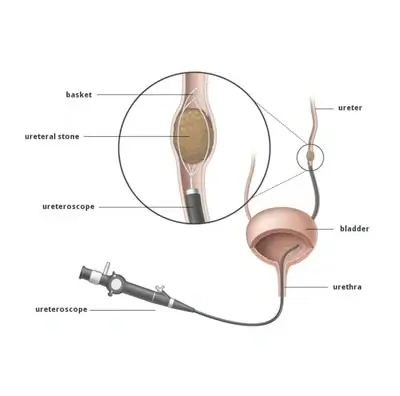
A ureteral stent is placed after laser lithotripsy for kidney stones to ensure proper urine drainage from the kidney to the bladder, preventing swelling, blockages from stone fragments, or potential complications like infection.
Most stents remain in place for 1-4 weeks to allow healing and fragment passage, with removal often at a 1-2 week follow-up cystoscopy. Duration varies by stone size/location and healing—shorter (days) for uncomplicated ureteral stones, longer (up to 6 weeks) for kidney stones or swelling.